
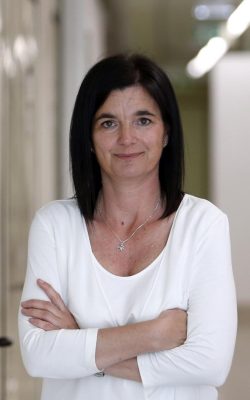
Mojca Juriševič, PhD, is a Professor of Educational Psychology at the Faculty of Education, University of Ljubljana, Slovenia. Her research expertise encompasses learning motivation, teacher professional development, and gifted education. As the founder and head of the Centre for Research and Promotion of Giftedness at the Faculty, she has made significant contributions to the field. Professor Juriševič authored the chapter on gifted education in the 2011 White Paper on Education in Slovenia and co-authored the National Education Programme 2023–2033, which addresses the needs of gifted students. In 2024, she led a team at the University of Ljubljana to develop guidelines for the education of talented students in higher education.
Internationally recognised for her work, she serves on the Executive Committee of the World Council for Gifted and Talented Children, the European Talent Support Development Council, and is a full member of the International Society for the Study of Creativity and Innovation. She is an associate editor of the European Psychologist. In recognition of her achievements, she received the National Award for Excellence in Higher Education in 2020 and was honoured as Slovenia’s Congress Ambassador in 2023 for chairing the scientific committee of the 17th European Congress of Psychology.
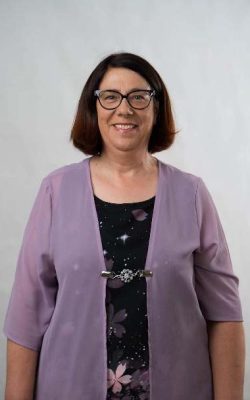
Karmen Pižorn, PhD, is a Professor of English in Education, at the Faculty of Education, University of Ljubljana, Slovenia. Her research focuses on second language acquisition, language assessment, young foreign language learners, students with specific learning needs learning second/foreign languages and assessment of children’s early language skills.
She coordinated a six-year national project Languages Matter which determined which factors support and which hinder the creation of a supportive learning environment for the development of plurilingualism in the Slovenian school context. Starting in 2024, she has been a member of the Language Policy Expert Group at the Council of Europe, where she is helping to develop a self-assessment tool for governments to evaluate their implementation of plurilingual and intercultural education.
She currently serves as the Dean of the Faculty of Education at the University of Ljubljana.
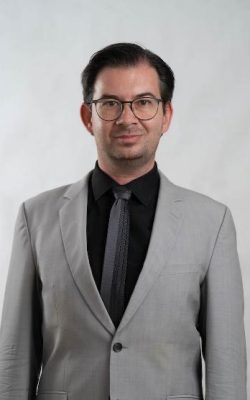
Janez Vogrinc, PhD, is a Professor of Educational Research whose expertise encompasses teacher education, higher education quality assurance, evaluation research, action research, and the professional development of educators. In 2024, he played a pivotal role in preparing a national programme aimed at the development of the education system in the Republic of Slovenia for the upcoming decade.
He has participated in numerous national and international research projects and currently leads the project for the Modernisation of Educational Study Programmes in Slovenia, in addition to overseeing capacity-building programmes at the University of Ljubljana. He served two terms as Dean of the Faculty of Education at the University of Ljubljana and is presently the Head of the Research Institute within the Faculty and the Vice-President of the University of Ljubljana.
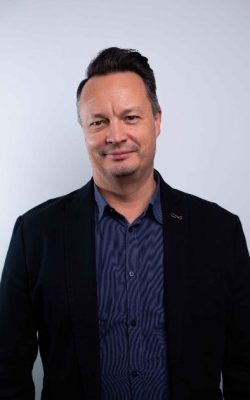
Iztok Devetak, PhD, is a Professor of Chemical Education at the Faculty of Education, University of Ljubljana, Slovenia. His research primarily investigates how students at various educational levels acquire chemistry knowledge through the three levels of chemical representation. In addition, he examines context-based approaches to chemistry education, the utilisation of eye-tracking technology and augmented reality, as well as environmental chemistry education and the enhancement of teachers’ health-management competencies. He is also actively engaged in research pertaining to gifted education, particularly focusing on the implementation of active learning strategies to enrich the chemistry learning experiences of gifted students.
In 2009, he was awarded the Fulbright Scholarship, and since 2025, he has held the position of Chair of the European Chemical Society Division of Chemical Education. He serves as the Editor-in-Chief of the Q2 SCOPUS-indexed CEPS Journal, as well as an Associate Editor for Chemistry Teacher International. Additionally, he is a member of the editorial boards for several prestigious Q1 journals, including Chemistry Education Research and Practice, and the International Journal of Science Education.
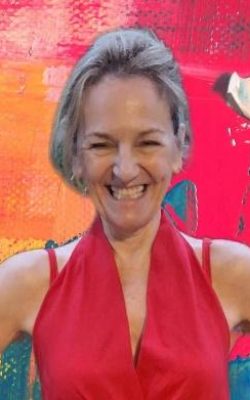
Alenka Vidrih is an assistant professor at the Faculty of Education at the University of Ljubljana. She heads the Creative Art Therapy Programme and teaches creative arts in the Department of Primary Education, Preschool Education and Special Education. Vidrih is a founding member of the National Association of Creative Arts Therapists of Slovenia. At the international level, she plays an active role as a representative in the European Consortium for Arts Therapies Education (ECArTE), which she has coordinated in recent years. She is currently a member of the editorial board of the Croatian Journal of Rehabilitation. Vidrih is the founder of the model of performative drama AV and has coordinated numerous national and international projects. She is a member of the Center for Research and Promotion of Giftedness at the University of Ljubljana Faculty of Education.
Her research interests are in the performing arts and health, arts in education, therapy and gifted education, where she explores the transformative power of creative expression and giving a voice to vulnerable people. Originally an artist, she continues to work in an artistic context. She has published widely on the creative arts in education and therapy and regularly speaks at international conferences on the intersection between these fields.
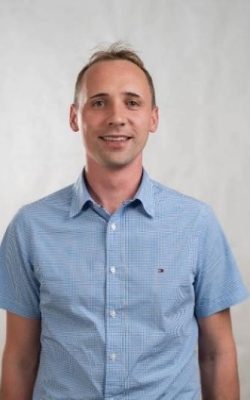
Miha Slapničar, PhD, is Assistant Professor of Chemistry Education at the University of Ljubljana, Faculty of Education, Slovenia. His research focuses on identifying and eliminating misconceptions in chemistry education. He explores how eye-tracking technology can improve the understanding of redox reactions and investigates the use of augmented reality to improve conceptual learning in chemistry. His work contributes to the promotion of evidence-based teaching strategies for high-achieving students and the development of innovative pedagogical approaches that support differentiated instruction. As an author of chemistry textbooks and workbooks for all school levels, Dr Slapničar has contributed significantly to chemistry education in Slovenia.
Dr Slapničar is a member of the National Commission for Chemistry Competitions in Slovenia and plays an active role in the organization and assessment of chemistry competitions at national level. He is also a member of the preparatory committee for the International Junior Science Olympiad (IJSO), where he is involved in the development of competition tasks and assessment criteria. His commitment to supporting gifted students also extends to supervising research projects at secondary school and university level to encourage enquiry-based learning and scientific thinking in young researchers.
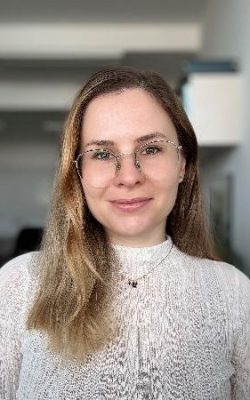
Neža Podlogar is teaching assistant of educational psychology and PhD student at the University of Ljubljana, Slovenia. Her research interests focus on self-concept and intelligence as predictors of academic achievement and psychological aspects of gifted education. She is a member of the Center for Research and Promotion of Giftedness at the University of Ljubljana Faculty of Education and Slovenian Psychologists’ Association.
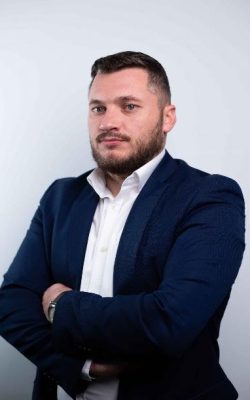
Marjan Stankov, LL.M., is a secretary at the Faculty of Education of the University of Ljubljana. His role at the faculty demonstrates his commitment to education and supporting the academic community. He is a member of the Quality Assurance Committee of the Faculty of Education, which addresses, monitors, and evaluates all important issues related to educational, scientific-research, and artistic work, and proposes measures to improve the quality of this work. Furthermore, he has also been a member of the Faculty of Education’s Management Board since 2023. At the Faculty of Education, he also serves as the Data Protection Officer (DPO). His combination of legal knowledge and experience in scientific research contributes to the efficient operation of the faculty and supports its mission in education and research.
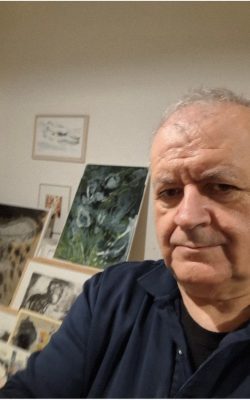
He began working in fine-art printmaking and experimenting with new printmaking processes at the Pedagogical Academy under Professor Ivo Mršnik. In 1985, he graduated from the Academy of Fine Arts in Ljubljana, Department of Printmaking, in the class of Professor Zvest Apollonio, and in 1990, he completed his specialist postgraduate studies in Printmaking with Professors Zvest Apollonio and Branko Suhy. In 1997, he obtained an MSc in Art Didactics at the Academy of Fine Arts in Ljubljana. He is a Full Professor of Drawing and Printmaking in the Department of Art Education at the Faculty of Education, University of Ljubljana, and the author of numerous publications in the field of visual art, art theory and art pedagogy. He has held more than 80 solo exhibitions and has participated in approximately 240 group exhibitions in Slovenia and abroad. In the field of printmaking technology, he has developed and established several new approaches to collagraphy. He has received multiple awards for his work, both nationally and internationally.
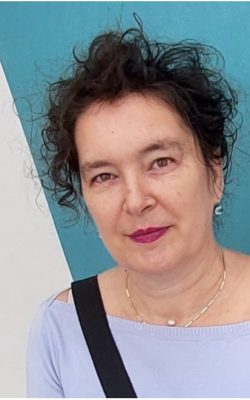
Mmag. Mojca Zlokarnik is an academy-trained painter and printmaker, professor and editor. She completed her BA (1993) and MA (1995) in Painting at the Ljubljana Academy of Fine Arts and Design with Prof. Metka Krašovec, and received her MA in Printmaking (1998) from the same institution as a student in the class of Prof. Lojze Logar. She furthered her studies in Prague, New York, Paris, Bulgaria and on numerous other, less formal trips abroad. She was editor-in-chief of the art journal Likovne besede (Artwords) from 2001 to 2015 and is now a member of its editorial board. She was co-editor of Ljubljana Personal, Alternative City Guide from 2009 to 2018. Since March 2017 she has been president of the Ljubljana Fine Artists Society.
She is an assistant professor of printmaking at the University of Ljubljana. Since 2021 she has been employed at the UL Faculty of Education, and she also teaches printmaking at the Academy of Fine Arts and Design, University of Ljubljana.
She has taken part in many solo and group exhibitions in Slovenia and abroad. She works in the fields of fine art printmaking, painting and animated film. In 2016 she was nominated for the Queen Sonja Print Award.
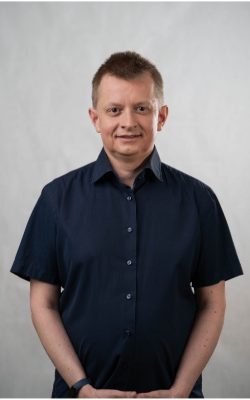
Boštjan Kuzman, PhD, is a researcher and educator whose primary research area is mathematics, with a particular focus on algebraic graph theory. His research also encompasses mathematics education, mathematical problem solving, and gifted education, with an emphasis on identifying and nurturing mathematical talent. By integrating theoretical research with educational practice, he seeks to advance innovative approaches to teaching mathematics and to foster creativity, critical thinking, and excellence among gifted learners.
In addition to his research, dr. Kuzman is actively involved in the promotion of mathematics and science through the Slovenian Society of Mathematicians, Physicists and Astronomers (DMFA Slovenije). He contributes to educational programs, mentors gifted students, and supports initiatives that encourage young people to engage with mathematics and STEM disciplines. He values international collaboration and is committed to sharing research findings and good practices with the global gifted education community.
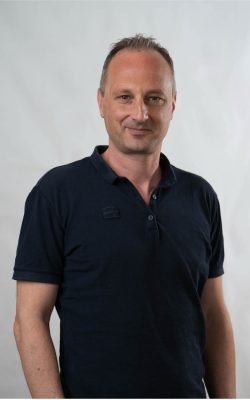
Igor Repac is the Head of the Office for Research and International Cooperation at the Faculty of Education, University of Ljubljana. He has extensive experience in the management and coordination of international higher education activities, research support, and the development of strategic international partnerships. His work focuses on the implementation of European programmes, particularly Erasmus+, as well as on fostering international collaboration in research and higher education. At the Faculty of Education, he supports researchers and academic staff in the preparation and implementation of international projects and contributes to the internationalisation of teaching, research, and institutional development. He is a member of the Governing Board of the Slovenian Educational Researcher Association (SLODRE), and a member of the Board of Management in the Comenius Association, a European network of more than 40 higher education institutions for teacher education that promotes intercultural cooperation, mobility, and the exchange of good practices in education.